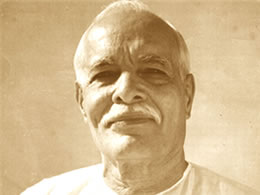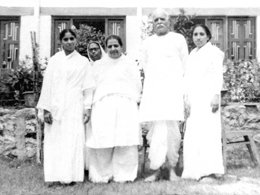
Brahma Kumaris was founded by Dada Lekhraj Kripalani, a retired Indian businessman, in 1937 in Hyderabad, a city now in Pakistan. His spiritual name is Prajapita Brahma and he is lovingly called Brahma Baba. After experiencing a series of visions in 1936, he was inspired to create a school where the principles and practices of a virtuous and meditative life could be taught. The original name was 'Om Mandali'. It consisted of a handful of men, women and children, many of whom decided to stay together as a community.
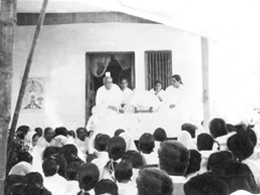
In spite of the incredible social upheavals which were going on in pre-Partition India, these people came together, initially in Hyderabad and a year later they moved to Karachi. With time, a simple and clear body of knowledge about the nature of the soul, God and time became revealed. In 1950 (two years after Partition), the group moved to its present location in Mount Abu, India. Until then, these nearly 400 individuals lived as a self-sufficient community, devoting their time to intense spiritual study, meditation and self-transformation.
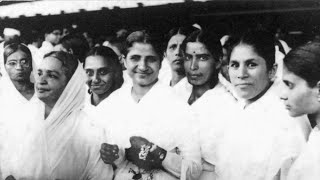
The Story of the Brahma Kumaris
Learn the amazing story of how the Brahma Kumaris grew to over one million students, starting with one ordinary man in India named Lekraj.
Who was he?
Brahma Baba, born into a humble home as Lekhraj Kripalani in the 1880s, was the son of a village schoolmaster. Lekhraj was brought up within the disciplines of the Hindu tradition. After different jobs, he entered the jewellery business, later earning a considerable fortune as a diamond trader. He was the father of five children and a leader within his local community, known especially for his philanthropy. In 1936, around the time when most people at his age start to plan their retirement, he actually entered into the most active and fascinating phase of his life. After a series of deep spiritual experiences and visions, he felt an extremely strong pull to give up his business and dedicate his time, energy and wealth to laying the foundations of what later would become the Brahma Kumaris World Spiritual University.
Between 1937 and 1938, he formed a Managing Committee of eight young women and surrendered all his property and assets to a Trust administered by them.
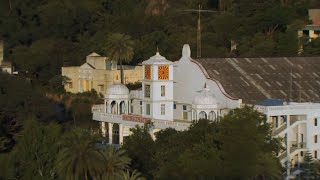
After guiding the creation of many Brahma Kumaris centres throughout India, he passed on in January 1969. The Tower of Peace on the Madhuban campus is a tribute to the invincible spirit of this ordinary human being who achieved greatness by rising to the challenge of the deeper truths of life.
Brahma Baba's legacy
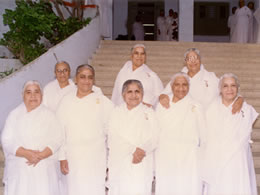
Many years have passed since Brahma Baba's series of visions in 1936. The lifestyle revolution he began has inspired millions to empower themselves and create hope for the future. The life skills that Brahma Baba taught have stood the test of time. The young women that he put to the forefront have become beacons of love, peace and wisdom, and led the movement forward.
Brahma Kumari Mohini Panjabi
 She is the Administrative Head of Brahma Kumaris. She has been with the BK's since childhood in Delhi, even while she was a student at the University of Delhi. She served with the founder, Brahma Baba, opening centres in India. In 1974 she began serving abroad, establishing a BK presence in North American, first in the Caribbean (1976) and then in New York (1978). She is president of the Brahma Kumaris World Spiritual Organization of the USA, the regional coordinator of the Brahma Kumaris for the Americas and the Caribbean and is representative of the BK's to the United Nations. She will share her time between India and the USA.
Brahma Kumari Jayanti Kirpalani
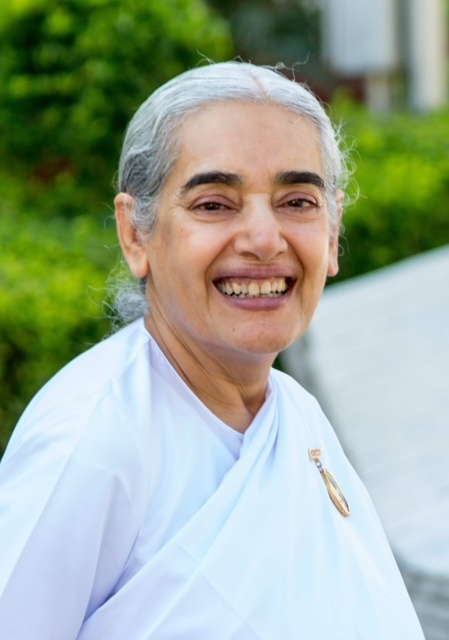 She is an Additional Administrative Head of the Brahma Kumaris. Born in India, she moved with her family to London in 1957 at the age of 8. Her family was instrumental in bringing Raj Yoga to the West. As she returned to India over the years, she met the founder, Brahma Baba on many occasions and at age 19 she made the decision to pursue a life of spiritual study and service with the Brahma Kumaris. Her unique childhood prepared her to bring the wisdom of the East to the West. She is an eloquent speaker and has spoken widely on climate change, applied values and spiritual practice. She is the regional coordinator for the Brahma Kumaris activities in Europe and the Middle East.

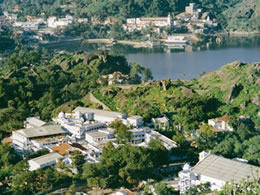 Mount Abu, high in the Aravali Mountains of Rajasthan, provided an ideal location for reflection and contemplation for the original group's move from Karachi in 1950. After a few years in a rented building, the community moved to the present site which remains the Prajapita Brahma Kumaris Ishwariya Vishwa Vidyalaya (Brahma Kumaris World Spiritual University). The Brahma Kumaris spiritual headquarters is known as Madhuban (‘Forest of Honey').